Tampilkan postingan dengan label Older Adults. Tampilkan semua postingan

Minggu, 13 September 2015

adult history What Happened At Acalanes? - japraklupo

Older Adults - Hallo sahabat fashion, Pada Artikel yang anda baca kali ini dengan judul Older Adults, kami telah mempersiapkan artikel ini dengan baik untuk anda baca dan ambil informasi didalamnya. mudah-mudahan isi postingan Artikel Cuts and closures, Artikel How Things Work, Artikel Older Adults, Artikel Perspective, Artikel Think About It, yang kami tulis ini dapat anda pahami. baiklah, selamat membaca.

Judul : adult history What Happened At Acalanes? - japraklupo
link : adult history What Happened At Acalanes? - japraklupo

Baca juga


Older Adults

What happens when funding is threatened, reduced,
removed, and destabilized for programs paid by the
public and designed to serve it?

Click on the "read more" link to find out.


That's what we can learn from what happened to
Adult Schools and Adult Education these last six years,
and stretching back further than that, from the last
one hundred and fifty.

Acalanes, as did so many Adult Schools since funding
was flexed by Governor Schwarzenegger in 2009,
went through tremendous turmoil and at one point,
was slated for closure.  

The LaMorinda Weekly story, "Adult Students Wanted at Del Valle,"
provided in full below, tells one version of the story.

George Porter, in his Perspective piece on Acalanes' Older Adult Program,
tells another.

Putting those two pieces together, the question
comes to mind, "Which adults are wanted at Del Valle -
and why?"

Adult Schools and Adult Education have gone through
many changes in the past 150 years, as we can learn
from Kristen Pursley's two powerpoints:

A History of Adult Education in California:  We've Been Here Before

* The Battle for Adult Education in California: Historical Context

Each time funding was destabilized, this paid for by
the public institution of education for the public
has changed.  Why?  To what end?  The answers to
those questions tell the real story, however it's described
in the news.


LaMorinda Weekly

by Cathy Tyson
September 9th, 2015

     Despite funding concerns this past spring, Acalanes Adult
Education at the Del Valle campus near Rossmoor is open
and administrators want to encourage enrollment to help
keep the program healthy; fall classes are starting soon.

Since the adoption of Assembly Bill 86, a bill to redesign
the statewide adult education system to speed up academic
 and career success, funding for adult education has changed
dramatically. Now revenue comes in the form of block grants
 that are distributed to regional educational consortia to
develop joint plans for serving basic adult education
students. The goal is to focus on adult students who have
low levels of literacy, need to learn English as a second
language, and high school dropouts who want to earn a
diploma, along with career education to help transition
those students to post-secondary education and the labor
market.

While the overhaul is not a bad thing, it clearly leaves
 behind adults who simply want to be lifelong learners and
pursue education for the joy of it and for some mental exercise.

"Bottom line, we want to meet the needs of our student
population," said new director of the Del Valle Education
Center, Steven France. Unfortunately without support
from the state going forward, classes are now entirely
paid for by student fees - which translates to a roughly
25 percent increase in the cost of each class. France says
that works out to about $7 more per class hour - less than
the cost of a movie.

The school continues to offer a range of fall classes,
everything from art to language to money management.
Administrators are encouraging students to sign up,
because unlike in past years, a minimum of 15 students
are required to enroll in each class in order for the program
to be sustainable. Less than that threshold means either the
hours of instruction will decrease, cost per student will
 increase, or the class will be canceled. Robust class
enrollment will allow the program to grow and expand
class offerings.

New Del Valle Education Center director Steve France
and office staff,
Jenny Knapp, Lissa Heptig and Carolyn Madderra
    Photo C. Tyson


This past spring, the future of the program was in doubt.
 A number of full-time staffers have been laid off, including
former director Frank Acojido, in response to the sea change
 in state funding. France didn't have to go far to fill the
position; he was the former director of the Acalanes
Center for Independent Study, which is also on the
Del Valle campus.

          In order to fund its popular adult enrichment classes,
administrators at Del Valle had to take a hard look at what
it really costs to run its programs. Students were surveyed
to see if they would support a 25 percent increase in class
fees to cover overhead, insurance, utility costs and more,
which they did. Seniors get a 10 percent discount, and the
 costs are still fairly reasonable. For example the
one-evening-only class, "Savvy Social Security Planning
for Couples," is $25, and 10 "Italian 1A" classes cost $130,
or $117 for seniors. It's anticipated that pricing classes to
represent the actual cost of delivering the service should
be a sustainable model going forward, barring any big
surprises.

There is also a push to look at additional options to
help utilize the recently renovated campus, which is only
open during the day and just two evenings per week as
a way to maximize usage and cut back on expenses.
There continues to be strong community support as
well as support from the Acalanes Union High School
District to keep the facility open.

The vast majority of students at this facility live nearby,
 in Rossmoor or in Lamorinda, and are interested in
enrichment classes. The best way to show support is to
sign up for a class or two and learn something new, France says.
Registration for these and many other classes is available
online at www.acalanes.k12.ca.us/adulted or by phone or
in person at the Acalanes Adult Education office at
1963 Tice Valley Blvd. in Walnut Creek. Some classes
 start the week of Sept. 14, others later this fall; check the
class schedule for all the details.

What happens when funding is threatened, reduced,
removed, and destabilized for programs paid by the
public and designed to serve it?

Click on the "read more" link to find out.


That's what we can learn from what happened to
Adult Schools and Adult Education these last six years,
and stretching back further than that, from the last
one hundred and fifty.

Acalanes, as did so many Adult Schools since funding
was flexed by Governor Schwarzenegger in 2009,
went through tremendous turmoil and at one point,
was slated for closure.  

The LaMorinda Weekly story, "Adult Students Wanted at Del Valle,"
provided in full below, tells one version of the story.

George Porter, in his Perspective piece on Acalanes' Older Adult Program,
tells another.

Putting those two pieces together, the question
comes to mind, "Which adults are wanted at Del Valle -
and why?"

Adult Schools and Adult Education have gone through
many changes in the past 150 years, as we can learn
from Kristen Pursley's two powerpoints:

A History of Adult Education in California:  We've Been Here Before

* The Battle for Adult Education in California: Historical Context

Each time funding was destabilized, this paid for by
the public institution of education for the public
has changed.  Why?  To what end?  The answers to
those questions tell the real story, however it's described
in the news.


LaMorinda Weekly

by Cathy Tyson
September 9th, 2015

     Despite funding concerns this past spring, Acalanes Adult
Education at the Del Valle campus near Rossmoor is open
and administrators want to encourage enrollment to help
keep the program healthy; fall classes are starting soon.

Since the adoption of Assembly Bill 86, a bill to redesign
the statewide adult education system to speed up academic
 and career success, funding for adult education has changed
dramatically. Now revenue comes in the form of block grants
 that are distributed to regional educational consortia to
develop joint plans for serving basic adult education
students. The goal is to focus on adult students who have
low levels of literacy, need to learn English as a second
language, and high school dropouts who want to earn a
diploma, along with career education to help transition
those students to post-secondary education and the labor
market.

While the overhaul is not a bad thing, it clearly leaves
 behind adults who simply want to be lifelong learners and
pursue education for the joy of it and for some mental exercise.

"Bottom line, we want to meet the needs of our student
population," said new director of the Del Valle Education
Center, Steven France. Unfortunately without support
from the state going forward, classes are now entirely
paid for by student fees - which translates to a roughly
25 percent increase in the cost of each class. France says
that works out to about $7 more per class hour - less than
the cost of a movie.

The school continues to offer a range of fall classes,
everything from art to language to money management.
Administrators are encouraging students to sign up,
because unlike in past years, a minimum of 15 students
are required to enroll in each class in order for the program
to be sustainable. Less than that threshold means either the
hours of instruction will decrease, cost per student will
 increase, or the class will be canceled. Robust class
enrollment will allow the program to grow and expand
class offerings.

New Del Valle Education Center director Steve France
and office staff,
Jenny Knapp, Lissa Heptig and Carolyn Madderra
    Photo C. Tyson


This past spring, the future of the program was in doubt.
 A number of full-time staffers have been laid off, including
former director Frank Acojido, in response to the sea change
 in state funding. France didn't have to go far to fill the
position; he was the former director of the Acalanes
Center for Independent Study, which is also on the
Del Valle campus.

          In order to fund its popular adult enrichment classes,
administrators at Del Valle had to take a hard look at what
it really costs to run its programs. Students were surveyed
to see if they would support a 25 percent increase in class
fees to cover overhead, insurance, utility costs and more,
which they did. Seniors get a 10 percent discount, and the
 costs are still fairly reasonable. For example the
one-evening-only class, "Savvy Social Security Planning
for Couples," is $25, and 10 "Italian 1A" classes cost $130,
or $117 for seniors. It's anticipated that pricing classes to
represent the actual cost of delivering the service should
be a sustainable model going forward, barring any big
surprises.

There is also a push to look at additional options to
help utilize the recently renovated campus, which is only
open during the day and just two evenings per week as
a way to maximize usage and cut back on expenses.
There continues to be strong community support as
well as support from the Acalanes Union High School
District to keep the facility open.

The vast majority of students at this facility live nearby,
 in Rossmoor or in Lamorinda, and are interested in
enrichment classes. The best way to show support is to
sign up for a class or two and learn something new, France says.
Registration for these and many other classes is available
online at www.acalanes.k12.ca.us/adulted or by phone or
in person at the Acalanes Adult Education office at
1963 Tice Valley Blvd. in Walnut Creek. Some classes
 start the week of Sept. 14, others later this fall; check the
class schedule for all the details.

Sabtu, 22 Agustus 2015

adult history Perspective: George Porter on Acalanes Adult School's "Older Adults Program" - japraklupo

Older Adults - Hallo sahabat fashion, Pada Artikel yang anda baca kali ini dengan judul Older Adults, kami telah mempersiapkan artikel ini dengan baik untuk anda baca dan ambil informasi didalamnya. mudah-mudahan isi postingan Artikel CCAE, Artikel CFT, Artikel Concerns, Artikel Cuts and closures, Artikel Older Adults, Artikel Perspective, Artikel Think About It, yang kami tulis ini dapat anda pahami. baiklah, selamat membaca.

Judul : adult history Perspective: George Porter on Acalanes Adult School's "Older Adults Program" - japraklupo
link : adult history Perspective: George Porter on Acalanes Adult School's "Older Adults Program" - japraklupo

Baca juga


Older Adults

George Porter, a fourteen year veteran teacher of Older Adults classes at Berkeley Adult School, two term chair of the City of Berkeley's Aging Commission, and member of CCAE (California Council of Adult Education) and CFT (California Federation of Teachers), wrote this perspective piece in response to the news about Acalanes Adult School's survival and their Older Adult program.  (You can read the news report here.)
A PERSPECTIVE ON ACALANES ADULT SCHOOL'S "OLDER ADULT PROGRAM":

Congrats to Acalanes Older Adult Ed. for surviving, but at what cost and should they be viewed as a model?

Click on the "read more" link to learn more.

First off, please bear in mind that Acalanes Adult Ed. is immediately adjacent to Rossmoor, a close to 10,000 strong, gated, 55+, "active senior" community. This is a highly regarded, award winning development that in years past provided an affordable option for middle-class retirees to relocate. That, though (to my understanding), has been changing rapidly. The City of Walnut Creek - where Rossmoor is located - has gentrified considerably since the development was first built and more recently well heeled baby-boomers looking for a "pied a terre" through the wanderings of early retirement have opted to settle in Rossmoor. This is raising prices to the point where the middle-class is now hard pressed to buy in. Add to this the fact that successful, upper-middle class children are looking for a "safe and comfortable place" to move their aging parents into and that the development fits that bill, it's clear the demographic of such places around California will steadily shift up the economic ladder.

That's not to say that everyone who attends Acalanes Adult Ed. is from Rossmoor but it makes little difference in this case. Close to 27% of Walnut Creek's population is over 65 and, though not all are well off by a long shot, many are and can afford to take classes with fees at the "self-supporting" level. Though estimates vary, it's reasonable to assume the municipalities average home price is pushing $800k and the median household income around $120k - quite high for a community with over 1/4 of the population 65+ and the majority of that group presumably aged out of the workforce. Walnut Creek is also very "white" with only roughly 10% of the population identifying themselves as Hispanic of African-American.

Put simply, if a self-supporting Older Adult program can make it anywhere in California, Acalanes Adult School is the place and I wish them well, just NOT as a model and even in that community I worry about those elders who have and will continue to fall through the cracks. Ms. Sownowski states in the Contra Costa Times article:

"(when) We began the very difficult task of transitioning our lifelong education classes from being state-supported to fee-based... we had a lot of resistance from students because they were used to paying very low fees. We lost students and teachers, but we're happy that now we have a sustainable program."

Her implication is that Acalanes Adult School lost students because they had the nasty expectation of paying low fees and couldn't break this. Doesn't it cross her mind that some might actually have decided they couldn't afford the higher cost? Does she have no understanding about what it means to be elderly and living on a fixed income? Does she have no idea how many seniors, though they put on a good show otherwise, are really only a major expenses or two away from having the modest, comfortable life they are trying to sustain crumble sending them spiraling downward? No idea that they aren't being cheap and stubborn, but cautious and frugal? Apparently not.

As far as the teaching staff goes, I'm sure it wasn't just those who couldn't "make the cut" into the brave new self-supporting world that were lost, but those who saw that their teaching credentials and experience were in danger of becoming meaningless, that their position in the educational system was being "de-professionalized" and that their status as public school teacher would be reduced to that of an independent contractor taking his or her cut of what the market would bear. Older Adult programs lost some of their best teachers, teachers who understandably just couldn't economically or emotionally stay the course - if the Adult Education system as a whole has suffered through a terrible cold these last few years, the Older Adult programs have had pneumonia and this was not relieved but instead exacerbated by those further up the Administrative food-chain constantly sneaking into their sick room with the suffocating pillow in hand. A disheartening time for those involved which had the secondary effect of scaring off the younger instructors needed to take their place in the field.

Again, despite all this, I wish Acalanes Adult Ed. well, but as a model...? If you want to ensure that the relatively healthy (the "active-senior") and wealthy remain that way as they age, it's very fine indeed and few of the wiser, better educated middle class and lower will benefit as well. But for the aging middle class in general that is struggling to get by now, whose numbers and tenuousness of position will increase dramatically over the years ahead and for those less well off it provides nothing. We need to do better if only for the fact that medical costs will rise proportionately to this neglect.

Again, we must do better. The question is how. Subsidization? A sliding scale? Free classes but located at sites or in communities where those not so well off tend the congregate? The list goes on, but problem is too many in the Legislature as well as the Governor simply don't want to engage the issue, have put on blinders and are walking in lock-step towards the self-supporting model. Others in the Legislature aren't even aware there is an issue. Some have been duped into believing that these classes continue to be funded as they always have - there are many statements and articles in the press that fail to mention that this support now needs to come through the school districts' general fund. An unlikely event, especially in the poorer communities where the need is often the greatest!

What to do? First off, make darned sure your representatives in the Legislature are aware of the issue and the FACTS surrounding it. From there, I'd like to know if any of you have ideas about how to solve the problem of making sure the needed educational resources provided by Older Adults programs is fairly distributed and don't eat up a disproportionate amount of the budget. Anybody got a plan?

Let's work together for the common good,

George Porter, 14 year faculty, Berkeley Adult School

- Member of:

   COSAS (Communities Organized to Support Adult School)
   CCAE (California Council of Adult Education)
   Berkeley Federation of Teachers (affiliated with CFT, California Federation of Teachers)

- 2-term chair, City of Berkeley's Commission on Aging  

George Porter, a fourteen year veteran teacher of Older Adults classes at Berkeley Adult School, two term chair of the City of Berkeley's Aging Commission, and member of CCAE (California Council of Adult Education) and CFT (California Federation of Teachers), wrote this perspective piece in response to the news about Acalanes Adult School's survival and their Older Adult program.  (You can read the news report here.)
A PERSPECTIVE ON ACALANES ADULT SCHOOL'S "OLDER ADULT PROGRAM":

Congrats to Acalanes Older Adult Ed. for surviving, but at what cost and should they be viewed as a model?

Click on the "read more" link to learn more.

First off, please bear in mind that Acalanes Adult Ed. is immediately adjacent to Rossmoor, a close to 10,000 strong, gated, 55+, "active senior" community. This is a highly regarded, award winning development that in years past provided an affordable option for middle-class retirees to relocate. That, though (to my understanding), has been changing rapidly. The City of Walnut Creek - where Rossmoor is located - has gentrified considerably since the development was first built and more recently well heeled baby-boomers looking for a "pied a terre" through the wanderings of early retirement have opted to settle in Rossmoor. This is raising prices to the point where the middle-class is now hard pressed to buy in. Add to this the fact that successful, upper-middle class children are looking for a "safe and comfortable place" to move their aging parents into and that the development fits that bill, it's clear the demographic of such places around California will steadily shift up the economic ladder.

That's not to say that everyone who attends Acalanes Adult Ed. is from Rossmoor but it makes little difference in this case. Close to 27% of Walnut Creek's population is over 65 and, though not all are well off by a long shot, many are and can afford to take classes with fees at the "self-supporting" level. Though estimates vary, it's reasonable to assume the municipalities average home price is pushing $800k and the median household income around $120k - quite high for a community with over 1/4 of the population 65+ and the majority of that group presumably aged out of the workforce. Walnut Creek is also very "white" with only roughly 10% of the population identifying themselves as Hispanic of African-American.

Put simply, if a self-supporting Older Adult program can make it anywhere in California, Acalanes Adult School is the place and I wish them well, just NOT as a model and even in that community I worry about those elders who have and will continue to fall through the cracks. Ms. Sownowski states in the Contra Costa Times article:

"(when) We began the very difficult task of transitioning our lifelong education classes from being state-supported to fee-based... we had a lot of resistance from students because they were used to paying very low fees. We lost students and teachers, but we're happy that now we have a sustainable program."

Her implication is that Acalanes Adult School lost students because they had the nasty expectation of paying low fees and couldn't break this. Doesn't it cross her mind that some might actually have decided they couldn't afford the higher cost? Does she have no understanding about what it means to be elderly and living on a fixed income? Does she have no idea how many seniors, though they put on a good show otherwise, are really only a major expenses or two away from having the modest, comfortable life they are trying to sustain crumble sending them spiraling downward? No idea that they aren't being cheap and stubborn, but cautious and frugal? Apparently not.

As far as the teaching staff goes, I'm sure it wasn't just those who couldn't "make the cut" into the brave new self-supporting world that were lost, but those who saw that their teaching credentials and experience were in danger of becoming meaningless, that their position in the educational system was being "de-professionalized" and that their status as public school teacher would be reduced to that of an independent contractor taking his or her cut of what the market would bear. Older Adult programs lost some of their best teachers, teachers who understandably just couldn't economically or emotionally stay the course - if the Adult Education system as a whole has suffered through a terrible cold these last few years, the Older Adult programs have had pneumonia and this was not relieved but instead exacerbated by those further up the Administrative food-chain constantly sneaking into their sick room with the suffocating pillow in hand. A disheartening time for those involved which had the secondary effect of scaring off the younger instructors needed to take their place in the field.

Again, despite all this, I wish Acalanes Adult Ed. well, but as a model...? If you want to ensure that the relatively healthy (the "active-senior") and wealthy remain that way as they age, it's very fine indeed and few of the wiser, better educated middle class and lower will benefit as well. But for the aging middle class in general that is struggling to get by now, whose numbers and tenuousness of position will increase dramatically over the years ahead and for those less well off it provides nothing. We need to do better if only for the fact that medical costs will rise proportionately to this neglect.

Again, we must do better. The question is how. Subsidization? A sliding scale? Free classes but located at sites or in communities where those not so well off tend the congregate? The list goes on, but problem is too many in the Legislature as well as the Governor simply don't want to engage the issue, have put on blinders and are walking in lock-step towards the self-supporting model. Others in the Legislature aren't even aware there is an issue. Some have been duped into believing that these classes continue to be funded as they always have - there are many statements and articles in the press that fail to mention that this support now needs to come through the school districts' general fund. An unlikely event, especially in the poorer communities where the need is often the greatest!

What to do? First off, make darned sure your representatives in the Legislature are aware of the issue and the FACTS surrounding it. From there, I'd like to know if any of you have ideas about how to solve the problem of making sure the needed educational resources provided by Older Adults programs is fairly distributed and don't eat up a disproportionate amount of the budget. Anybody got a plan?

Let's work together for the common good,

George Porter, 14 year faculty, Berkeley Adult School

- Member of:

   COSAS (Communities Organized to Support Adult School)
   CCAE (California Council of Adult Education)
   Berkeley Federation of Teachers (affiliated with CFT, California Federation of Teachers)

- 2-term chair, City of Berkeley's Commission on Aging  

Senin, 13 Juli 2015

adult history Guidelines for Navigating New Waters - japraklupo

Older Adults - Hallo sahabat fashion, Pada Artikel yang anda baca kali ini dengan judul Older Adults, kami telah mempersiapkan artikel ini dengan baik untuk anda baca dan ambil informasi didalamnya. mudah-mudahan isi postingan Artikel AB86, Artikel New Rules, Artikel Older Adults, Artikel Parent Ed, Artikel Tracking, Artikel Transparency, yang kami tulis ini dapat anda pahami. baiklah, selamat membaca.

Judul : adult history Guidelines for Navigating New Waters - japraklupo
link : adult history Guidelines for Navigating New Waters - japraklupo

Baca juga


Older Adults

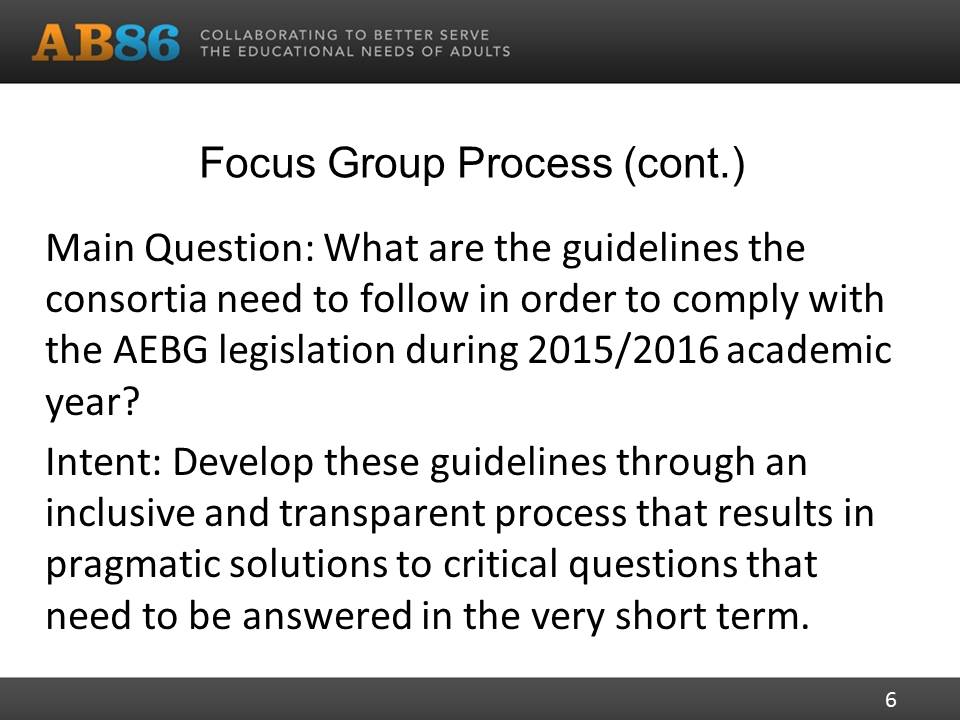
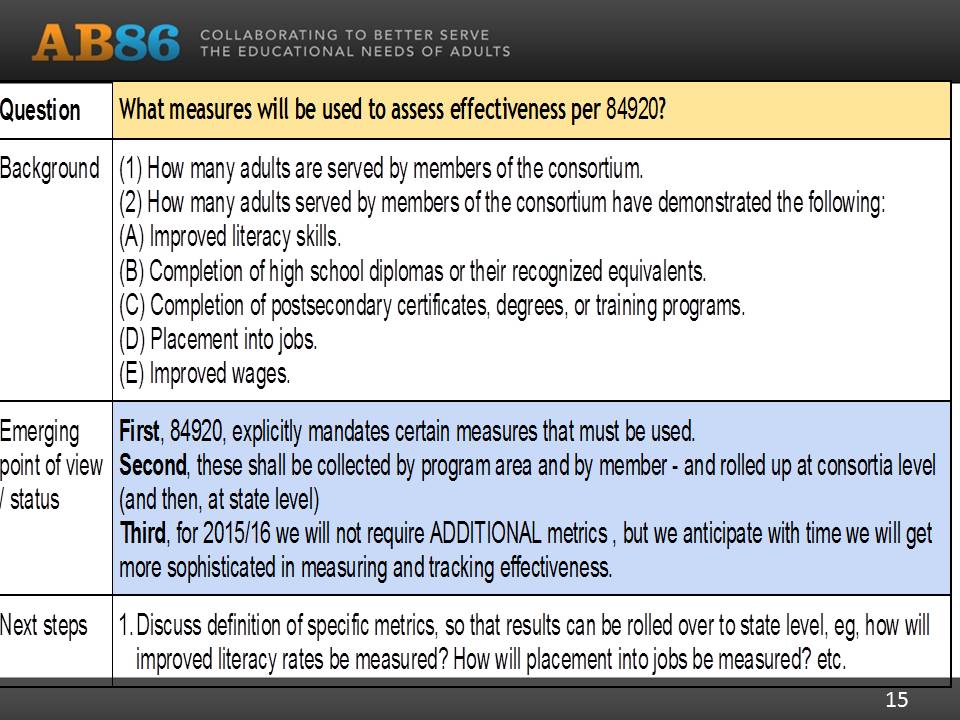
The July 10, 2015 Technical Webinar had a lot of helpful information to help guide us through new waters we're sailing through.

Implementation Focus Group's Draft Guidelines
        
     Listen to the Recording


The July 10, 2015 Technical Webinar had a lot of helpful information to help guide us through new waters we're sailing through.

Implementation Focus Group's Draft Guidelines
        
     Listen to the Recording


Selasa, 30 Juni 2015

adult history Older Adults Adult Education in the News and in the Budget - japraklupo

Older Adults - Hallo sahabat fashion, Pada Artikel yang anda baca kali ini dengan judul Older Adults, kami telah mempersiapkan artikel ini dengan baik untuk anda baca dan ambil informasi didalamnya. mudah-mudahan isi postingan Artikel AB104, Artikel Budget, Artikel Legislature, Artikel Older Adults, Artikel Press, Artikel Press Conference, yang kami tulis ini dapat anda pahami. baiklah, selamat membaca.

Judul : adult history Older Adults Adult Education in the News and in the Budget - japraklupo
link : adult history Older Adults Adult Education in the News and in the Budget - japraklupo

Baca juga


Older Adults

In the final part of the budget process, funding for Older Adults Adult Education ( -- to at least some degree), was added into trailer bill AB104.  The new budget was signed by Governor Brown and it goes into effect tomorrow July 1, 2015. 

 The new trailer bill language in AB104 can be found here.

Here are three articles and an announcement from Assembly Member Roger Hernandez' website:

1.  Assembly Member Hernandez Rallies Support for Older Adult Education - Assembly Member Roger Hernandez' website

Today, Assemblymember Roger Hernández (D-West Covina) held a press conference to discuss the importance of keeping older adult education programs a priority in the state budget. Hundreds of supporters came to voice the need to maintain programs which are vital to the success of California’s diverse and multigenerational population available to our senior community throughout the state.  
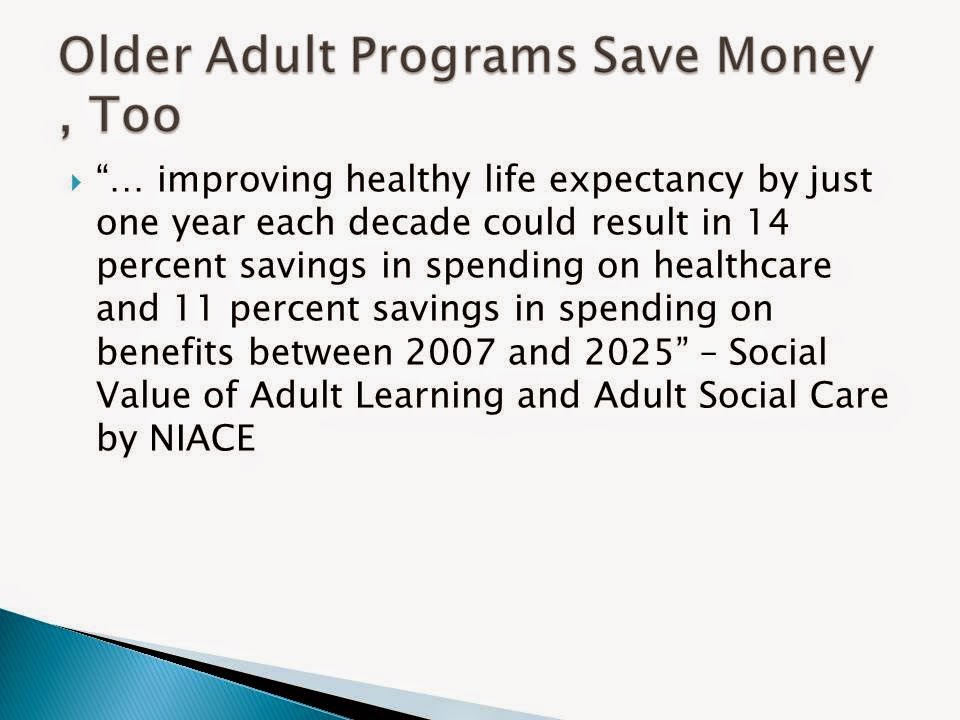
According to the California Department of Aging, almost one in five Californians will be over age 65 by 2030. With a large generation of baby boomers beginning to retire, older adult programs are instrumental to help keep seniors active and healthy in our communities while also providing societal savings in medical costs.

“The benefits of older adult education classes for seniors are invaluable. These classes provide an opportunity for seniors to improve their mental and physical health.  It provides them a space to be engaged, to participate in their communities, and remain independent,” stated Assemblymember Hernández. “The voice and needs of our seniors should not be lost as California puts its budget priorities forward.”  Read the article in full here.

Assembly Member Roger Hernandez' press conference
about Older Adults Adult Education


2. Older Adults Programs Get Last Minute Funding in State Budget  June 10, 2015, San Gabriel Valley Tribune

"A group of determined seniors were celebrating Wednesday after a state budget committee changed wording that will allow adult schools to keep their older adult programs.
The Legislative Budget Conference Committee decided late Tuesday to include older adult programs on the list of programs eligible for state funding. The programs, including Baldwin Park’s Older Adult Program, had been on the chopping block after they were excluded from Gov. Jerry Brown’s proposed budget.

“The action taken by the budget conference committee to restore older adult education funding is a victory for seniors in Baldwin Park, seniors in the San Gabriel Valley and seniors across California,” Assemblyman Roger Hernandez, D-West Covina, said in a statement. “I am extremely proud of the community coming together and making older adult programs a top priority. Without seniors in my district who brought this to my attention directly, this would not have happened. They deserve the full credit.”  Read the article in full here.

3.   LAUSD To Lay Off Teachers in Older Adult Program.  City To Pick Up Slack.  June 17, 2015, LA Times

"In an effort to save $2 million, Los Angeles Unified officials plan to lay off all 18 teachers who instruct wellness classes for older adults.

This year, the program taught 12,392 seniors how to stay physically active and mentally alert with courses such as yoga and memory training."

4.  Last Minute Moves Support Student Discipline, Adult Ed - Cabinet Report, June 24, 2015.

"The list of courses that Adult Education programs may offer is laid out in the final trailer bill language and they include classes for older adults, as has always been the case.
In a major restructuring of how the programs are overseen and funded, Gov. Jerry Brown proposed removing some of the less “academic” type courses often available through Adult Education, including classes for the elderly and some non-credit classes. It appears as though advocates for those groups won out.

For some 150 years, adult education in California has served as a core service to integrating new immigrants into U.S. society as well as a reentry point for high school dropouts and older students who wanted a chance at higher education.

The national recession devastated adult programs, as the state was forced to move money traditionally earmarked for those services to general educational uses. According to the California Community College Chancellor’s Office, which shares jurisdiction over adult education with K-12 schools, overall participation fell by more than 800,000 students between 2008 and 2013.
The budget offers $500 million for adult education that would be distributed based on regional needs by the Community College Chancellor, the state superintendent and the California State Board of Education."


In the final part of the budget process, funding for Older Adults Adult Education ( -- to at least some degree), was added into trailer bill AB104.  The new budget was signed by Governor Brown and it goes into effect tomorrow July 1, 2015. 

 The new trailer bill language in AB104 can be found here.

Here are three articles and an announcement from Assembly Member Roger Hernandez' website:

1.  Assembly Member Hernandez Rallies Support for Older Adult Education - Assembly Member Roger Hernandez' website

Today, Assemblymember Roger Hernández (D-West Covina) held a press conference to discuss the importance of keeping older adult education programs a priority in the state budget. Hundreds of supporters came to voice the need to maintain programs which are vital to the success of California’s diverse and multigenerational population available to our senior community throughout the state.  
According to the California Department of Aging, almost one in five Californians will be over age 65 by 2030. With a large generation of baby boomers beginning to retire, older adult programs are instrumental to help keep seniors active and healthy in our communities while also providing societal savings in medical costs.

“The benefits of older adult education classes for seniors are invaluable. These classes provide an opportunity for seniors to improve their mental and physical health.  It provides them a space to be engaged, to participate in their communities, and remain independent,” stated Assemblymember Hernández. “The voice and needs of our seniors should not be lost as California puts its budget priorities forward.”  Read the article in full here.

Assembly Member Roger Hernandez' press conference
about Older Adults Adult Education


2. Older Adults Programs Get Last Minute Funding in State Budget  June 10, 2015, San Gabriel Valley Tribune

"A group of determined seniors were celebrating Wednesday after a state budget committee changed wording that will allow adult schools to keep their older adult programs.
The Legislative Budget Conference Committee decided late Tuesday to include older adult programs on the list of programs eligible for state funding. The programs, including Baldwin Park’s Older Adult Program, had been on the chopping block after they were excluded from Gov. Jerry Brown’s proposed budget.

“The action taken by the budget conference committee to restore older adult education funding is a victory for seniors in Baldwin Park, seniors in the San Gabriel Valley and seniors across California,” Assemblyman Roger Hernandez, D-West Covina, said in a statement. “I am extremely proud of the community coming together and making older adult programs a top priority. Without seniors in my district who brought this to my attention directly, this would not have happened. They deserve the full credit.”  Read the article in full here.

3.   LAUSD To Lay Off Teachers in Older Adult Program.  City To Pick Up Slack.  June 17, 2015, LA Times

"In an effort to save $2 million, Los Angeles Unified officials plan to lay off all 18 teachers who instruct wellness classes for older adults.

This year, the program taught 12,392 seniors how to stay physically active and mentally alert with courses such as yoga and memory training."

4.  Last Minute Moves Support Student Discipline, Adult Ed - Cabinet Report, June 24, 2015.

"The list of courses that Adult Education programs may offer is laid out in the final trailer bill language and they include classes for older adults, as has always been the case.
In a major restructuring of how the programs are overseen and funded, Gov. Jerry Brown proposed removing some of the less “academic” type courses often available through Adult Education, including classes for the elderly and some non-credit classes. It appears as though advocates for those groups won out.

For some 150 years, adult education in California has served as a core service to integrating new immigrants into U.S. society as well as a reentry point for high school dropouts and older students who wanted a chance at higher education.

The national recession devastated adult programs, as the state was forced to move money traditionally earmarked for those services to general educational uses. According to the California Community College Chancellor’s Office, which shares jurisdiction over adult education with K-12 schools, overall participation fell by more than 800,000 students between 2008 and 2013.
The budget offers $500 million for adult education that would be distributed based on regional needs by the Community College Chancellor, the state superintendent and the California State Board of Education."


adult history AB104: New Rules for a New Era in Adult Education - japraklupo

Older Adults - Hallo sahabat fashion, Pada Artikel yang anda baca kali ini dengan judul Older Adults, kami telah mempersiapkan artikel ini dengan baik untuk anda baca dan ambil informasi didalamnya. mudah-mudahan isi postingan Artikel AB104, Artikel AB86, Artikel Budget, Artikel Democracy, Artikel Older Adults, yang kami tulis ini dapat anda pahami. baiklah, selamat membaca.

Judul : adult history AB104: New Rules for a New Era in Adult Education - japraklupo
link : adult history AB104: New Rules for a New Era in Adult Education - japraklupo

Baca juga


Older Adults

AB104 is the trailer bill about Adult Education.

Go here to read AB104 in full.

Go here to get to it via the AB86 website (the place to go for info about the new Regional Consortia system).

There are lots of things to learn and understand.

Here are a few bits. 

First, from the AB86 website:

AB104: Adult Education Block Grant

The California Legislature has passed Assembly Bill 104 which  includes the legislation for the Adult Education Block Grant. The Adult Education Block Grant will fund adult education providers and the adult education regional consortia.  Please refer to Sec. 39, Article 9, Section 84900.

What's Next?

With this final language, the CCCCO and the CDE are working together to develop guidance regarding next steps for implementation of the Adult Education Block Grant. Guidance regarding the fund allocations,  reporting requirements, and outcomes and measures will be forthcoming over the coming weeks and months. We will be sure to keep you updated and will continue to provide technical assistance webinars to provide as much assistance as we can as we transition to implementation of your regional plans. Draft guidance is expected to be made public in July 2015.


From the CCAE Legislative Update:

Programs eligible for funding include:

o   Basic skills, high school equivalency/diploma
o   Citizenship, ESL
o   Workforce entry or reentry, including explicit ability for older adults to access these programs
o   Adult programs, including older adult access, that are "primarily designed to develop knowledge and skills to assist elementary and secondary school children to succeed academically in school" (a la child development for elementary and secondary school children)
o   Adults with disabilities programs
o   Short term career technical education
o   Pre-apprenticeship programs/activities


Section 39 
84913.
 (a) Funds apportioned for the program shall be used only for support of the following:
(1) Programs in elementary and secondary basic skills, including programs leading to a high school diploma or high school equivalency certificate.
(2) Programs for immigrants eligible for educational services in citizenship, English as a second language, and workforce preparation.
(3) Programs for adults, including, but not limited to, older adults, that are primarily related to entry or reentry into the workforce.
(4) Programs for adults, including, but not limited to, older adults, that are primarily designed to develop knowledge and skills to assist elementary and secondary school children to succeed academically in school.
(5) Programs for adults with disabilities.
(6) Programs in career technical education that are short term in nature and have high employment potential.
(7) Programs offering preapprenticeship training activities conducted in coordination with one or more apprenticeship programs approved by the Division of Apprenticeship Standards for the occupation and geographic area.
(b) A consortium may use no more than 5 percent of funds allocated in a given fiscal year for the sum of the following:
(1) The costs of administration of these programs.
(2) The costs of the consortium.
 

SEC. 22.

 Section 41976 of the Education Code is amended to read:
41976.
 (a) For purposes of this chapter, the following classes and courses are authorized to be offered by school districts and county superintendents of schools for apportionment purposes from the adult education fund:
(1) Adult programs in parenting, including parent cooperative preschools, and classes in child growth and development, parent-child relationships, and parenting.
(2) Adult programs in elementary and secondary basic skills and other courses and classes required for the high school diploma. Apportionments for these courses and classes may only be generated by students who do not possess a high school diploma, except for remedial academic courses or classes in reading, mathematics, and language arts.
(3) Adult education programs in English as a second language.
(4) Adult education programs for immigrants eligible for educational services in citizenship, English as a second language, and workforce preparation classes in the basic skills of speaking, listening, reading, writing, mathematics, decisionmaking and problem solving skills, and other classes required for preparation to participate in job specific technical training.
(5) Adult education programs for adults with disabilities.
(6) Adult short-term career technical education programs with high employment potential. Any reference to “vocational” education or programs in adult education means “career technical” education or programs in adult education.
(7) Adult programs for older adults.
(8) Programs offering pre-apprenticeship training activities conducted in coordination with one or more apprenticeship programs approved by the Division of Apprenticeship Standards for the occupation and geographic area.
(9) Adult programs in home economics.
(10) Adult programs in health and safety education.
(b) No state apportionment shall be made for any course or class that is not set forth in subdivision (a).
 
 
For comparison purposes, AB86 originally stated:

The purpose of AB 86 Section 76, Article 3 is to provide grant funds to regional consortium to create and implement a plan to better provide adults in its region with all of the following:

  • Elementary and secondary basic skills, including classes required for a high school diploma or high school equivalency certificate
  • Classes and courses for immigrants eligible for education services in citizenship and English as a second language and workforce preparation classes in basic skills
  • Education programs for adults with disabilities
  • Short-term career technical education programs with high employment potential
  • Programs for apprentices

AB104 is the trailer bill about Adult Education.

Go here to read AB104 in full.

Go here to get to it via the AB86 website (the place to go for info about the new Regional Consortia system).

There are lots of things to learn and understand.

Here are a few bits. 

First, from the AB86 website:

AB104: Adult Education Block Grant

The California Legislature has passed Assembly Bill 104 which  includes the legislation for the Adult Education Block Grant. The Adult Education Block Grant will fund adult education providers and the adult education regional consortia.  Please refer to Sec. 39, Article 9, Section 84900.

What's Next?

With this final language, the CCCCO and the CDE are working together to develop guidance regarding next steps for implementation of the Adult Education Block Grant. Guidance regarding the fund allocations,  reporting requirements, and outcomes and measures will be forthcoming over the coming weeks and months. We will be sure to keep you updated and will continue to provide technical assistance webinars to provide as much assistance as we can as we transition to implementation of your regional plans. Draft guidance is expected to be made public in July 2015.


From the CCAE Legislative Update:

Programs eligible for funding include:

o   Basic skills, high school equivalency/diploma
o   Citizenship, ESL
o   Workforce entry or reentry, including explicit ability for older adults to access these programs
o   Adult programs, including older adult access, that are "primarily designed to develop knowledge and skills to assist elementary and secondary school children to succeed academically in school" (a la child development for elementary and secondary school children)
o   Adults with disabilities programs
o   Short term career technical education
o   Pre-apprenticeship programs/activities


Section 39 
84913.
 (a) Funds apportioned for the program shall be used only for support of the following:
(1) Programs in elementary and secondary basic skills, including programs leading to a high school diploma or high school equivalency certificate.
(2) Programs for immigrants eligible for educational services in citizenship, English as a second language, and workforce preparation.
(3) Programs for adults, including, but not limited to, older adults, that are primarily related to entry or reentry into the workforce.
(4) Programs for adults, including, but not limited to, older adults, that are primarily designed to develop knowledge and skills to assist elementary and secondary school children to succeed academically in school.
(5) Programs for adults with disabilities.
(6) Programs in career technical education that are short term in nature and have high employment potential.
(7) Programs offering preapprenticeship training activities conducted in coordination with one or more apprenticeship programs approved by the Division of Apprenticeship Standards for the occupation and geographic area.
(b) A consortium may use no more than 5 percent of funds allocated in a given fiscal year for the sum of the following:
(1) The costs of administration of these programs.
(2) The costs of the consortium.
 

SEC. 22.

 Section 41976 of the Education Code is amended to read:
41976.
 (a) For purposes of this chapter, the following classes and courses are authorized to be offered by school districts and county superintendents of schools for apportionment purposes from the adult education fund:
(1) Adult programs in parenting, including parent cooperative preschools, and classes in child growth and development, parent-child relationships, and parenting.
(2) Adult programs in elementary and secondary basic skills and other courses and classes required for the high school diploma. Apportionments for these courses and classes may only be generated by students who do not possess a high school diploma, except for remedial academic courses or classes in reading, mathematics, and language arts.
(3) Adult education programs in English as a second language.
(4) Adult education programs for immigrants eligible for educational services in citizenship, English as a second language, and workforce preparation classes in the basic skills of speaking, listening, reading, writing, mathematics, decisionmaking and problem solving skills, and other classes required for preparation to participate in job specific technical training.
(5) Adult education programs for adults with disabilities.
(6) Adult short-term career technical education programs with high employment potential. Any reference to “vocational” education or programs in adult education means “career technical” education or programs in adult education.
(7) Adult programs for older adults.
(8) Programs offering pre-apprenticeship training activities conducted in coordination with one or more apprenticeship programs approved by the Division of Apprenticeship Standards for the occupation and geographic area.
(9) Adult programs in home economics.
(10) Adult programs in health and safety education.
(b) No state apportionment shall be made for any course or class that is not set forth in subdivision (a).
 
 
For comparison purposes, AB86 originally stated:

The purpose of AB 86 Section 76, Article 3 is to provide grant funds to regional consortium to create and implement a plan to better provide adults in its region with all of the following:

  • Elementary and secondary basic skills, including classes required for a high school diploma or high school equivalency certificate
  • Classes and courses for immigrants eligible for education services in citizenship and English as a second language and workforce preparation classes in basic skills
  • Education programs for adults with disabilities
  • Short-term career technical education programs with high employment potential
  • Programs for apprentices

Jumat, 26 Juni 2015

adult history CCAE: Adult Ed Block Grant Package Signed by the Governor - japraklupo

Older Adults - Hallo sahabat fashion, Pada Artikel yang anda baca kali ini dengan judul Older Adults, kami telah mempersiapkan artikel ini dengan baik untuk anda baca dan ambil informasi didalamnya. mudah-mudahan isi postingan Artikel Budget, Artikel CCAE, Artikel Good News, Artikel Gov Brown, Artikel K12 and CC Coordination, Artikel Older Adults, yang kami tulis ini dapat anda pahami. baiklah, selamat membaca.

Judul : adult history CCAE: Adult Ed Block Grant Package Signed by the Governor - japraklupo
link : adult history CCAE: Adult Ed Block Grant Package Signed by the Governor - japraklupo

Baca juga


Older Adults

From CCAE - California Council for Adult Education - Legislative Analyst Dawn Koepke:
 
Adult Ed Block Grant Package Signed by the Governor
 
Today we breathe a sigh of relief that the future of adult education, particularly with regard to adult schools, will be much brighter and more stable going forward.  The Legislature took the Governor's May Revise budget proposal and ran with it, making a few minor adjustments that are generally workable.  Concluding multiple years of hard work, sweat and tears, today the Governor signed AB 104, which includes the Adult Education Block Grant package.  His signature yesterday is ahead of the June 30th Constitutional deadline for him to sign a budget. 
 
While there was much wrangling over the budget in the last few weeks, the Legislature met their required deadline to pass the budget - or a few key parts of it - by the June 15th deadline.  The bulk of the package came together within 24 hours thereafter, with the Governor and Legislature agreeing to a more modest deal that relies on the Governor's more conservative revenue estimates.  The overall budget provides for a $115.4 billion package that saves billions of dollars and pays down debt, while directing more resources to schools and low-income Californians.  Additionally, they agreed to and Special Sessions were called to address transportation and Medi-Cal funding.
 
In terms of specifics for the Adult Education Block Grant package, it provides the following:

Hit the link to get all the info.


-       Includes $500 million in Proposition 98 General Fund revenue for the Adult Education Block Grant program
-       Entities eligible for funding from the Block Grant include school districts, county offices of education, community college districts, and joint powers authorities
-       Programs eligible for funding include:
o   Basic skills, high school equivalency/diploma
o   Citizenship, ESL
o   Workforce entry or reentry, including explicit ability for older adults to access these programs
o   Adult programs, including older adult access, that are "primarily designed to develop knowledge and skills to assist elementary and secondary school children to succeed academically in school" (a la child development for elementary and secondary school children)
o   Adults with disabilities programs
o   Short term career technical education
o   Pre-apprenticeship programs/activities
-       In order to receive funds from the Block Grant, a member must be part of a regional consortium
-       5% administrative cost and consortium expenditures cap
-       Provides for the distribution of funds to be jointly approved by the Superintendent of Public Instruction and Chancellor of the Community Colleges
-       Directs the Superintendent of Public Instruction and Chancellor of the Community Colleges to submit a plan to distribute WIOA Title II and Perkins funds to the consortia in future years
-       Provides for a Block Grant-funded maintenance of effort (MOE) for FY 15-16 based on the level of spending required for each of the last two years (FY 12-13 baseline); Caps it at $375 million
o   The Superintendent of Public Instruction and the Chancellor of the Community Colleges must certify the MOE no later than July 31, 2015
o   In order for any school district or county office of education to receive their MOE funds, they must be a member of a consortium
-       Provides that a schedule of allocations for the amount above the MOE shall be approved no later than October 30, 2015
-       Funds will be distributed in FY 16-17 and beyond based on current allocations, need in the region and effectiveness of providers
-       Requires each consortium to develop a comprehensive plan for adult education in its region at least once every three years with annual updates
-       Requires each consortium to create rules and procedures regarding decision making (publicly made), considering feedback on proposed decisions from interested stakeholders
-       Provides stability for adult schools by requiring existing funding be maintained unless a consortium finds a school or college cannot provide services that address the needs of the region or if it has been consistently ineffective in doing so
-       Requires the Superintendent of Public Instruction and Chancellor of the Community Colleges to report annually on the use of the funds and effectiveness in each consortium
-       Provides $25 million one-time Proposition 98 General Fund revenue to establish the data systems necessary to evaluate the effectiveness of local programs
-       Permits Block Grant-funded programs to serve adults only, defined as a person of 18 years of age or older
-       Each consortium member must commit to reporting any funds available to and used by that member for the purpose of adult education and workforce development services
-       Provides that the decision to designate a local fiscal agent is at the discretion of each consortium otherwise the funds would be apportioned directly to members of the consortium from the Superintendent and Chancellor
-       Acknowledges explicitly that the plans consortia have developed to date will satisfy the requirements of the Block Grant for the next three years, with the subsequent 3 year plan needing to incorporate any additional requirements or adjustments in the law that may not have been contemplated and included in the original plan
-       Requires the Superintendent and Chancellor to provide preliminary projections for the amounts that would be allocated in the subsequent two fiscal years to assist with stability and out-year planning
-       Explicitly provides that LCFF funding can be used for adult education purposes
 
Well....that is a lot of detail!  And most of it was a direct result of the great work CCAE and CAEAA have undertaken the last three years.  Kudos to you all!
 
One of the key items that I've received a lot of feedback regarding is on the issue of a local fiscal agent.  As you will recall, we fought hard to allow funding to be drawn down through CDE and our school districts.  This was critically important to help reinforce a K-12 adult school's identity.  Further, we were highly concerned that distribution of resources through a local fiscal agent would run the risk of distancing adult education programs from K12 districts. Regional plans build upon the unique identity of K12 adult schools and so it was imperative that they continued to be tied to CDE and their individual school districts.  It was for these reasons we were thrilled to see the ability for consortia to make their own decisions locally about whether to have a local fiscal agent or to rely on the funding to come through CDE and the school district.  While it has been characterized that lack of a local fiscal agent may result in adult schools not receiving their funding quickly, the timing should not be an issue.  To be clear, the language in AB 104 provides that the Superintendent and Chancellor must approve a schedule of allocations to each consortium by October 30th with the requirement to apportion the funds to a local fiscal agent, if designated, no more than 30 days later.  For a consortium that has not designated a local fiscal agent, the Superintendent and Chancellor are required to apportion the funds no more than 30 days after receipt of a final distribution schedule from the consortium.  This only means that the consortia who elect not to have a local fiscal agent will need to move quickly to finalize their local apportionment schedule so as to indicate how much the Superintendent and Chancellor should apportion to each member, which in theory could be done one day after the state apportionment numbers are finalized and submitted that day with the 30 day clock running the same schedule as the consortium with a local fiscal agent.  Presuming the consortia without a local fiscal agent move quickly to finalize their local apportionment schedule, there should be no delay in receipt of funds.
 
Given all of this, the decision is up to you at the local level as to whether you want to have a local fiscal agent or not.  As your state representatives, we want to be sure you know that there should be no concern with exercising this flexibility we worked so hard to obtain.  
 
As you've surely noted, this package was a huge victory for adult schools and for the students we serve.  We've helped put in place a framework from which we can build upon to ensure our students continue to have access to these critical programs while at the same time working with our partners to develop pathways for those same students to move on to a career or forward for further education.  Our students are the real winners in this without question.  And while the bulk of the package is workable, there will likely be a few things that will need to be further addressed in a clean-up bill later in the Legislative Session, including further clarity about the 5% administrative cap provision.   If there are other items you believe need to be clarified, please be sure to share with CCAE and CAEAA.
 
On behalf of CCAE and CAEAA, I thank you all for your dedication and for your efforts to help push us over the finishing line.  I look forward to continuing to work together to rebuild adult schools and supporting our students that have come to rely on our programs and services.  Strength in numbers....congratulations!

From CCAE - California Council for Adult Education - Legislative Analyst Dawn Koepke:
 
Adult Ed Block Grant Package Signed by the Governor
 
Today we breathe a sigh of relief that the future of adult education, particularly with regard to adult schools, will be much brighter and more stable going forward.  The Legislature took the Governor's May Revise budget proposal and ran with it, making a few minor adjustments that are generally workable.  Concluding multiple years of hard work, sweat and tears, today the Governor signed AB 104, which includes the Adult Education Block Grant package.  His signature yesterday is ahead of the June 30th Constitutional deadline for him to sign a budget. 
 
While there was much wrangling over the budget in the last few weeks, the Legislature met their required deadline to pass the budget - or a few key parts of it - by the June 15th deadline.  The bulk of the package came together within 24 hours thereafter, with the Governor and Legislature agreeing to a more modest deal that relies on the Governor's more conservative revenue estimates.  The overall budget provides for a $115.4 billion package that saves billions of dollars and pays down debt, while directing more resources to schools and low-income Californians.  Additionally, they agreed to and Special Sessions were called to address transportation and Medi-Cal funding.
 
In terms of specifics for the Adult Education Block Grant package, it provides the following:

Hit the link to get all the info.


-       Includes $500 million in Proposition 98 General Fund revenue for the Adult Education Block Grant program
-       Entities eligible for funding from the Block Grant include school districts, county offices of education, community college districts, and joint powers authorities
-       Programs eligible for funding include:
o   Basic skills, high school equivalency/diploma
o   Citizenship, ESL
o   Workforce entry or reentry, including explicit ability for older adults to access these programs
o   Adult programs, including older adult access, that are "primarily designed to develop knowledge and skills to assist elementary and secondary school children to succeed academically in school" (a la child development for elementary and secondary school children)
o   Adults with disabilities programs
o   Short term career technical education
o   Pre-apprenticeship programs/activities
-       In order to receive funds from the Block Grant, a member must be part of a regional consortium
-       5% administrative cost and consortium expenditures cap
-       Provides for the distribution of funds to be jointly approved by the Superintendent of Public Instruction and Chancellor of the Community Colleges
-       Directs the Superintendent of Public Instruction and Chancellor of the Community Colleges to submit a plan to distribute WIOA Title II and Perkins funds to the consortia in future years
-       Provides for a Block Grant-funded maintenance of effort (MOE) for FY 15-16 based on the level of spending required for each of the last two years (FY 12-13 baseline); Caps it at $375 million
o   The Superintendent of Public Instruction and the Chancellor of the Community Colleges must certify the MOE no later than July 31, 2015
o   In order for any school district or county office of education to receive their MOE funds, they must be a member of a consortium
-       Provides that a schedule of allocations for the amount above the MOE shall be approved no later than October 30, 2015
-       Funds will be distributed in FY 16-17 and beyond based on current allocations, need in the region and effectiveness of providers
-       Requires each consortium to develop a comprehensive plan for adult education in its region at least once every three years with annual updates
-       Requires each consortium to create rules and procedures regarding decision making (publicly made), considering feedback on proposed decisions from interested stakeholders
-       Provides stability for adult schools by requiring existing funding be maintained unless a consortium finds a school or college cannot provide services that address the needs of the region or if it has been consistently ineffective in doing so
-       Requires the Superintendent of Public Instruction and Chancellor of the Community Colleges to report annually on the use of the funds and effectiveness in each consortium
-       Provides $25 million one-time Proposition 98 General Fund revenue to establish the data systems necessary to evaluate the effectiveness of local programs
-       Permits Block Grant-funded programs to serve adults only, defined as a person of 18 years of age or older
-       Each consortium member must commit to reporting any funds available to and used by that member for the purpose of adult education and workforce development services
-       Provides that the decision to designate a local fiscal agent is at the discretion of each consortium otherwise the funds would be apportioned directly to members of the consortium from the Superintendent and Chancellor
-       Acknowledges explicitly that the plans consortia have developed to date will satisfy the requirements of the Block Grant for the next three years, with the subsequent 3 year plan needing to incorporate any additional requirements or adjustments in the law that may not have been contemplated and included in the original plan
-       Requires the Superintendent and Chancellor to provide preliminary projections for the amounts that would be allocated in the subsequent two fiscal years to assist with stability and out-year planning
-       Explicitly provides that LCFF funding can be used for adult education purposes
 
Well....that is a lot of detail!  And most of it was a direct result of the great work CCAE and CAEAA have undertaken the last three years.  Kudos to you all!
 
One of the key items that I've received a lot of feedback regarding is on the issue of a local fiscal agent.  As you will recall, we fought hard to allow funding to be drawn down through CDE and our school districts.  This was critically important to help reinforce a K-12 adult school's identity.  Further, we were highly concerned that distribution of resources through a local fiscal agent would run the risk of distancing adult education programs from K12 districts. Regional plans build upon the unique identity of K12 adult schools and so it was imperative that they continued to be tied to CDE and their individual school districts.  It was for these reasons we were thrilled to see the ability for consortia to make their own decisions locally about whether to have a local fiscal agent or to rely on the funding to come through CDE and the school district.  While it has been characterized that lack of a local fiscal agent may result in adult schools not receiving their funding quickly, the timing should not be an issue.  To be clear, the language in AB 104 provides that the Superintendent and Chancellor must approve a schedule of allocations to each consortium by October 30th with the requirement to apportion the funds to a local fiscal agent, if designated, no more than 30 days later.  For a consortium that has not designated a local fiscal agent, the Superintendent and Chancellor are required to apportion the funds no more than 30 days after receipt of a final distribution schedule from the consortium.  This only means that the consortia who elect not to have a local fiscal agent will need to move quickly to finalize their local apportionment schedule so as to indicate how much the Superintendent and Chancellor should apportion to each member, which in theory could be done one day after the state apportionment numbers are finalized and submitted that day with the 30 day clock running the same schedule as the consortium with a local fiscal agent.  Presuming the consortia without a local fiscal agent move quickly to finalize their local apportionment schedule, there should be no delay in receipt of funds.
 
Given all of this, the decision is up to you at the local level as to whether you want to have a local fiscal agent or not.  As your state representatives, we want to be sure you know that there should be no concern with exercising this flexibility we worked so hard to obtain.  
 
As you've surely noted, this package was a huge victory for adult schools and for the students we serve.  We've helped put in place a framework from which we can build upon to ensure our students continue to have access to these critical programs while at the same time working with our partners to develop pathways for those same students to move on to a career or forward for further education.  Our students are the real winners in this without question.  And while the bulk of the package is workable, there will likely be a few things that will need to be further addressed in a clean-up bill later in the Legislative Session, including further clarity about the 5% administrative cap provision.   If there are other items you believe need to be clarified, please be sure to share with CCAE and CAEAA.
 
On behalf of CCAE and CAEAA, I thank you all for your dedication and for your efforts to help push us over the finishing line.  I look forward to continuing to work together to rebuild adult schools and supporting our students that have come to rely on our programs and services.  Strength in numbers....congratulations!

Minggu, 24 Mei 2015

adult history CATESOL Legislative Advocate Jeff Frost on Gov. Brown's January Adult Ed Budget Proposal - japraklupo

Older Adults - Hallo sahabat fashion, Pada Artikel yang anda baca kali ini dengan judul Older Adults, kami telah mempersiapkan artikel ini dengan baik untuk anda baca dan ambil informasi didalamnya. mudah-mudahan isi postingan Artikel Budget, Artikel CATESOL, Artikel Gov Brown, Artikel Legislature, Artikel Older Adults, Artikel Parent Ed, Artikel Transparency, yang kami tulis ini dapat anda pahami. baiklah, selamat membaca.

Judul : adult history CATESOL Legislative Advocate Jeff Frost on Gov. Brown's January Adult Ed Budget Proposal - japraklupo
link : adult history CATESOL Legislative Advocate Jeff Frost on Gov. Brown's January Adult Ed Budget Proposal - japraklupo

Baca juga


Older Adults

This is obviously late in coming.  I'm posting it because I think it provides good information and analysis.  The May Revise only partly changes Gov. Brown's Budget Proposal for Adult Ed.  We need all the help we can get in understanding the possible ramifications of it.

Also, whatever happens or has happened in Adult Education these last six years, I imagine some day some graduate student or educational policy academic or historian will put it under a magnifying glass.  I certainly hope they do.  When that happens, blogs like this one will be important digs.

Hit the link to read Jeff's analysis.

Details of Governor’s Adult Education Proposal Made Public

Mar 13th, 2015 | By | Category: Advocacy, News
Download PDF
thumbnail of legislative advocate Jeff Frost
Jeff Frost
By JEFF FROST
—When the governor’s 2015-2016 state budget was unveiled in mid-January, adult education advocates were encouraged to see that it contained $500 million per year in ongoing funding to develop a stand-alone categorical program to begin the meet the needs of the old adult education program, which was allowed to become flexible in 2007-2008 during the beginning of the economic recession. The concept of creating new programs by region that would meet the specific local workforce and education needs of adults was generally supported in the education community. However, most statewide education organizations wanted to wait until the actual implementing language came out before taking any positions on the governor’s adult education proposal. The details were made public the week of February 16.
The details of the proposal are at once fairly simple but overly complex. The general concept is to allocate $500 million in ongoing funding to regions based on documented regional need. For the past two years, participating school districts and community colleges have been actively planning for adult education’s regional future by analyzing workforce demand and programmatic need. Those needs-based plans have continued to be massaged and analyzed and are to be the foundation of local budgeting and fund-allocation decisions. The budget trailer bill language (the implementing language) outlines that state funding will be apportioned by region based on each district’s overall percentage of need. Should demand exceed the overall funding available, each region’s allocation will be reduced accordingly. Before seeing the trailer bill language, some thought that the governor might give priority to some regions of the state over others, but this does not appear to be the case.
There are four main areas where the implementing language raises concerns from statewide organizations and adult ed advocates in the field. The concerns include:
 
1.  The proposal seems to be needlessly complicated in terms of how the funds will flow and to whom they will flow. The language sets up regional consortiums as new entities of local government with the ability to hire an executive director and spend up to 5% of the region’s funding administration

It seems that there are a number of alternatives to the bureaucratic nature of the regional delivery model set up in this trailer bill language. The model used for Special Education Local Plan Areas (SELPAs) could be used, in which one of the school districts serves as the administrator for the region; there would be far less funding spent on overall administration. It is likely that this formal structure will receive a great deal of scrutiny as the proposal moves forward.

2.   There is a significant level of state control over the direction of the new program. The language gives the executive director of the State Board of Education the ability to veto any funding allocations suggested by the two entities given authority to establish the program—the superintendent of public instruction and the community college chancellor.

This authority is unprecedented. While it has been common in the past to place overall approval authority in the hands of the State Board of Education (all of whose members are approved by the state Senate), there has never been an instance in which this level of authority has been given to an administrator in state government. This authorization is likely to be changed by the time the budget negotiations are concluded.

3.  Funding for each region will be allocated by a seven-member board, on which five of the seven voting members do not represent an entity that receives the Proposition 98 adult ed funding or operates the programs. Each region’s board will have one school district and one community college representative. The other five voting members will include representatives from a local workforce investment board, a local community-based organization or “other adult education entity,” a county social services representative, a county probation office representative, and a public member selected by the region’s members.

This governance structure raises concerns on two levels. One is that there is only one slot for a “school district” representative in a region that may have a dozen or more districts, and the other is that the non–Prop 98 voting members far outweigh the two that represent districts and community colleges. Additionally, there is no reason why the five non-school district representatives on the regional consortium board cannot provide significant programmatic input without being voting members. Again, each region could use the SELPA model, in which voting members represent the educational entities in the region.

4.  The focus of the new adult education programs is decidedly geared toward workforce needs and training. Concerns have been raised, mainly by the California Teachers Association, that the governor’s proposal is an attempt to take a long-standing program that focuses on the needs of poor and non–English-speaking adults and has transformed it, using Proposition 98 funds, into an accelerated workforce-training program. The implication is that the statutory direction of the new program will make it harder for school districts to offer ESL, adult basic education (ABE), high school diploma (HSD), and citizenship courses.

This concern is legitimate, but the direction of the new adult ed program is consistent with the long-standing intent of both the governor and the legislature that our adult program does need to be focused on job skills but that core courses such as ESL, ABE, and HSD are gateway skills that are needed to get into or to expand opportunities in any job market.

Significant concerns have been raised about all of these issues. It is clear that there are ways to address each of these concerns without significantly altering the intent of the governor’s proposal. Both houses of the legislature will be addressing this issue in the next weeks. CATESOL’s legislative advocates will keep everyone informed as this issue progresses.

Jeff Frost is CATESOL’s legislative advocate.

This is obviously late in coming.  I'm posting it because I think it provides good information and analysis.  The May Revise only partly changes Gov. Brown's Budget Proposal for Adult Ed.  We need all the help we can get in understanding the possible ramifications of it.

Also, whatever happens or has happened in Adult Education these last six years, I imagine some day some graduate student or educational policy academic or historian will put it under a magnifying glass.  I certainly hope they do.  When that happens, blogs like this one will be important digs.

Hit the link to read Jeff's analysis.

Details of Governor’s Adult Education Proposal Made Public

Mar 13th, 2015 | By | Category: Advocacy, News
Download PDF
thumbnail of legislative advocate Jeff Frost
Jeff Frost
By JEFF FROST
—When the governor’s 2015-2016 state budget was unveiled in mid-January, adult education advocates were encouraged to see that it contained $500 million per year in ongoing funding to develop a stand-alone categorical program to begin the meet the needs of the old adult education program, which was allowed to become flexible in 2007-2008 during the beginning of the economic recession. The concept of creating new programs by region that would meet the specific local workforce and education needs of adults was generally supported in the education community. However, most statewide education organizations wanted to wait until the actual implementing language came out before taking any positions on the governor’s adult education proposal. The details were made public the week of February 16.
The details of the proposal are at once fairly simple but overly complex. The general concept is to allocate $500 million in ongoing funding to regions based on documented regional need. For the past two years, participating school districts and community colleges have been actively planning for adult education’s regional future by analyzing workforce demand and programmatic need. Those needs-based plans have continued to be massaged and analyzed and are to be the foundation of local budgeting and fund-allocation decisions. The budget trailer bill language (the implementing language) outlines that state funding will be apportioned by region based on each district’s overall percentage of need. Should demand exceed the overall funding available, each region’s allocation will be reduced accordingly. Before seeing the trailer bill language, some thought that the governor might give priority to some regions of the state over others, but this does not appear to be the case.
There are four main areas where the implementing language raises concerns from statewide organizations and adult ed advocates in the field. The concerns include:
 
1.  The proposal seems to be needlessly complicated in terms of how the funds will flow and to whom they will flow. The language sets up regional consortiums as new entities of local government with the ability to hire an executive director and spend up to 5% of the region’s funding administration

It seems that there are a number of alternatives to the bureaucratic nature of the regional delivery model set up in this trailer bill language. The model used for Special Education Local Plan Areas (SELPAs) could be used, in which one of the school districts serves as the administrator for the region; there would be far less funding spent on overall administration. It is likely that this formal structure will receive a great deal of scrutiny as the proposal moves forward.

2.   There is a significant level of state control over the direction of the new program. The language gives the executive director of the State Board of Education the ability to veto any funding allocations suggested by the two entities given authority to establish the program—the superintendent of public instruction and the community college chancellor.

This authority is unprecedented. While it has been common in the past to place overall approval authority in the hands of the State Board of Education (all of whose members are approved by the state Senate), there has never been an instance in which this level of authority has been given to an administrator in state government. This authorization is likely to be changed by the time the budget negotiations are concluded.

3.  Funding for each region will be allocated by a seven-member board, on which five of the seven voting members do not represent an entity that receives the Proposition 98 adult ed funding or operates the programs. Each region’s board will have one school district and one community college representative. The other five voting members will include representatives from a local workforce investment board, a local community-based organization or “other adult education entity,” a county social services representative, a county probation office representative, and a public member selected by the region’s members.

This governance structure raises concerns on two levels. One is that there is only one slot for a “school district” representative in a region that may have a dozen or more districts, and the other is that the non–Prop 98 voting members far outweigh the two that represent districts and community colleges. Additionally, there is no reason why the five non-school district representatives on the regional consortium board cannot provide significant programmatic input without being voting members. Again, each region could use the SELPA model, in which voting members represent the educational entities in the region.

4.  The focus of the new adult education programs is decidedly geared toward workforce needs and training. Concerns have been raised, mainly by the California Teachers Association, that the governor’s proposal is an attempt to take a long-standing program that focuses on the needs of poor and non–English-speaking adults and has transformed it, using Proposition 98 funds, into an accelerated workforce-training program. The implication is that the statutory direction of the new program will make it harder for school districts to offer ESL, adult basic education (ABE), high school diploma (HSD), and citizenship courses.

This concern is legitimate, but the direction of the new adult ed program is consistent with the long-standing intent of both the governor and the legislature that our adult program does need to be focused on job skills but that core courses such as ESL, ABE, and HSD are gateway skills that are needed to get into or to expand opportunities in any job market.

Significant concerns have been raised about all of these issues. It is clear that there are ways to address each of these concerns without significantly altering the intent of the governor’s proposal. Both houses of the legislature will be addressing this issue in the next weeks. CATESOL’s legislative advocates will keep everyone informed as this issue progresses.

Jeff Frost is CATESOL’s legislative advocate.

Selasa, 12 Mei 2015

adult history The Battle for Adult Education in California: Historical Context - japraklupo

Older Adults - Hallo sahabat fashion, Pada Artikel yang anda baca kali ini dengan judul Older Adults, kami telah mempersiapkan artikel ini dengan baik untuk anda baca dan ambil informasi didalamnya. mudah-mudahan isi postingan Artikel cosas, Artikel Cuts and closures, Artikel Facts, Artikel Flexibility, Artikel General, Artikel Grassroots, Artikel How Things Work, Artikel K-12 Adult Ed, Artikel K12 and CC Coordination, Artikel Older Adults, Artikel Parent Ed, Artikel Public Education, Artikel Public vs. Private, Artikel Reform, Artikel Think About It, yang kami tulis ini dapat anda pahami. baiklah, selamat membaca.

Judul : adult history The Battle for Adult Education in California: Historical Context - japraklupo
link : adult history The Battle for Adult Education in California: Historical Context - japraklupo

Baca juga


Older Adults

From left to right,
Bruce Neuberger,
George & Kristen Pursley
Cynthia Eagleton
At the 2015 Network for Public Education Conference in Chicago, Kristen Pursley, Bruce Neuberger, and I presented a panel entitled, "The Battle for Adult Education."

The Conference was deep and powerful.
An AEM post on the conference is coming soon. 

Cuts and reform in California Adult Education are part of a larger puzzle affecting every piece of Public Education in the US.  To understand what is happening in Adult Education in California - and to influence it in a positive direction - we need to understand what is happening elsewhere - and we need historical context.

Historical context is what Kristen provided at our panel discussion.  Kristen is a lead ESL teacher at West Contra Costa Adult School.  She is a founding member of COSAS - Communities Organized to Support Adult Schools, a group that formed in response to the cuts six years ago and has met weekly since.   She authors the Save Your Adult School blog, a priceless repository of facts and insight about Adult Education. 

Click the link to see her powerpoint:


From left to right,
Bruce Neuberger,
George & Kristen Pursley
Cynthia Eagleton
At the 2015 Network for Public Education Conference in Chicago, Kristen Pursley, Bruce Neuberger, and I presented a panel entitled, "The Battle for Adult Education."

The Conference was deep and powerful.
An AEM post on the conference is coming soon. 

Cuts and reform in California Adult Education are part of a larger puzzle affecting every piece of Public Education in the US.  To understand what is happening in Adult Education in California - and to influence it in a positive direction - we need to understand what is happening elsewhere - and we need historical context.

Historical context is what Kristen provided at our panel discussion.  Kristen is a lead ESL teacher at West Contra Costa Adult School.  She is a founding member of COSAS - Communities Organized to Support Adult Schools, a group that formed in response to the cuts six years ago and has met weekly since.   She authors the Save Your Adult School blog, a priceless repository of facts and insight about Adult Education. 

Click the link to see her powerpoint: